
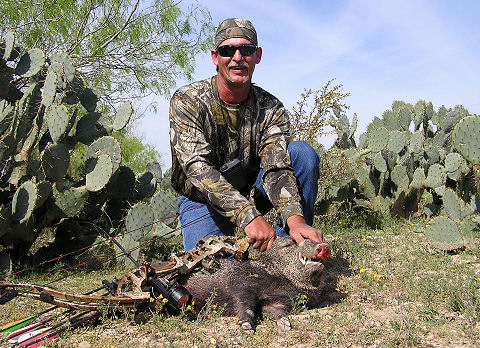
Javelina Hunting in Texas
For a stalking bowhunter, few animals offer a more exciting challenge than the javelina. Although they are notably nearsighted, javelina make up for it with an excellent sense of smell and keen hearing. A patient bowhunter who pays close attention to the wind and approaches from downwind can often close the distance for an ethical shot opportunity.
Javelina belong to the peccary family. Three peccary species range from the southwestern United States into Central and South America, but the collared peccary—commonly known as the javelina—is the only species found in the United States. In Texas, javelina primarily inhabit the state’s arid and semi-arid country, especially the South Texas brush country, Trans-Pecos desert grasslands, and the oak-juniper woodlands of the Edwards Plateau.
Habitat and Behavior
Javelina commonly travel in small herds or “bands,” often referred to as family groups, and generally maintain relatively limited home ranges. During cooler winter months, they are most active in the early morning and late afternoon. As Texas temperatures rise, they become largely nocturnal, moving and feeding after dark or during the cooler parts of the day.
Their diet consists mainly of cactus—especially prickly pear—along with mesquite beans, mast, fruits, and insects. In many areas of South Texas, javelina are also frequently found near deer feeders, where they readily feed on corn.
Temperament and Safety
Javelina have long carried an undeserved reputation for being overly aggressive. Because of their poor eyesight, they may remain nearby longer than other wildlife after being startled, which can sometimes be mistaken for bold or confrontational behavior.
When cornered, however, they can defend themselves effectively with their sharp canine teeth, often called tusks. Dogs that attempt to attack javelina can be seriously injured or killed. Aggressive encounters with people remain uncommon. What may look like a charge is often a nearsighted javelina attempting to escape in the direction of a hunter or other perceived threat. Loud jaw-popping is another defensive warning intended to discourage predators.
During the day, javelina often bed in caves, rock shelters, dense brush, and other shaded, protected areas.
Texas Regulations
In Texas, javelina are classified as game animals. They may be legally harvested with a valid hunting license during the established season in counties where a javelina season is open. There are currently (Sept. 2026) 99 of 254 counties that have a Javelina season. Regulations and seasons can vary, so hunters should always confirm current Texas Parks and Wildlife Department rules before heading afield. The statewide bag limit is two (2) animals per year.
Hunt Javelina With DeerTexas.com
Feral hogs and javelina often occupy the same country, making a combined hunt a practical and exciting option for Texas hunters. DeerTexas.com can help you find Texas hunting leases where javelina are included, along with select day hunts and package hunts designed specifically for javelina.
Whether you are looking for a South Texas brush-country stalk or a combined javelina and feral hog hunt, there is no shortage of opportunity in the Lone Star State.