
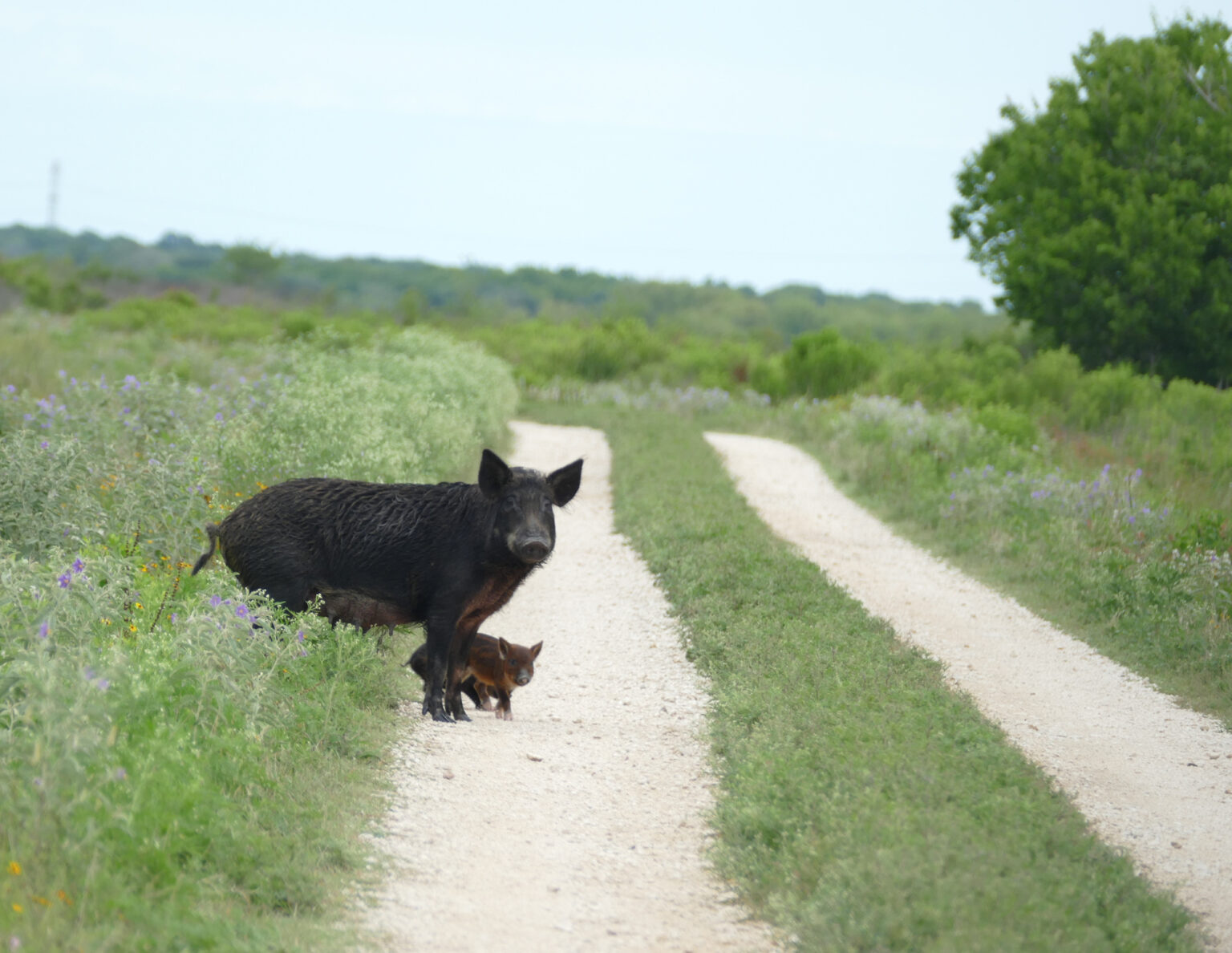
Texas officials estimate that the state’s feral hog population may number as many as 2 million animals. These invasive swine cause an estimated $400 million in annual damage by rooting through lawns, pastures, and agricultural fields in search of acorns, grubs, and other food sources. Mature boars can approach 400 pounds, and collisions with hogs that enter roadways can result in substantial vehicle damage and serious injuries.
Feral hogs may not be the traditional trophy animal, but they offer several advantages that appeal to Texas hunters:
1. They are among the state’s most abundant big-game animals.
2. They may be hunted year-round on private property with landowner authorization.
3. When properly handled and prepared, they can provide excellent table fare.
Spring can be an especially productive time to hunt hogs, as thinner vegetation may improve visibility and stalking opportunities. It is also a valuable time for landowners to reduce populations before these highly prolific animals produce large spring litters. Texas is believed to contain roughly half of the nation’s feral hog population—good news for hunters seeking opportunity, but a significant problem for landowners, farmers, wildlife habitat, and communities statewide.
Bowhunters, in particular, should consider the challenge and opportunity feral hogs provide. Hogs have an excellent sense of smell and keen hearing, but a patient hunter approaching from downwind may sometimes stalk within effective bow range of an individual animal. More often, however, feral hogs travel in family groups known as sounders. The many eyes, ears, and noses within a sounder can make a close stalk difficult.
For that reason, hogs are frequently hunted from established deer-stand locations near feeder sites, where legal and appropriate. Because feral hogs are primarily active at night, many hunters also pursue them after dark using lawful lighting and other permitted equipment. Hunters should always confirm current Texas regulations, landowner rules, and local restrictions before hunting at night or using artificial light.
Hog hunting is more than a recreational opportunity—it can contribute to land and habitat management. Feral hogs damage cropland, native vegetation, pastures, and riparian areas, the sensitive zones along rivers and streams. Their rooting and wallowing can accelerate erosion, degrade water quality, and destroy habitat faster than natural recovery and routine land-management efforts can restore it.
For hunters interested in locating Texas hog-hunting leases, DeerTexas.com lists a variety of opportunities across the state. With responsible harvest practices and proper field handling, feral hogs can help fill the freezer while giving hunters a chance to reduce pressure from one of Texas’s most destructive invasive species.